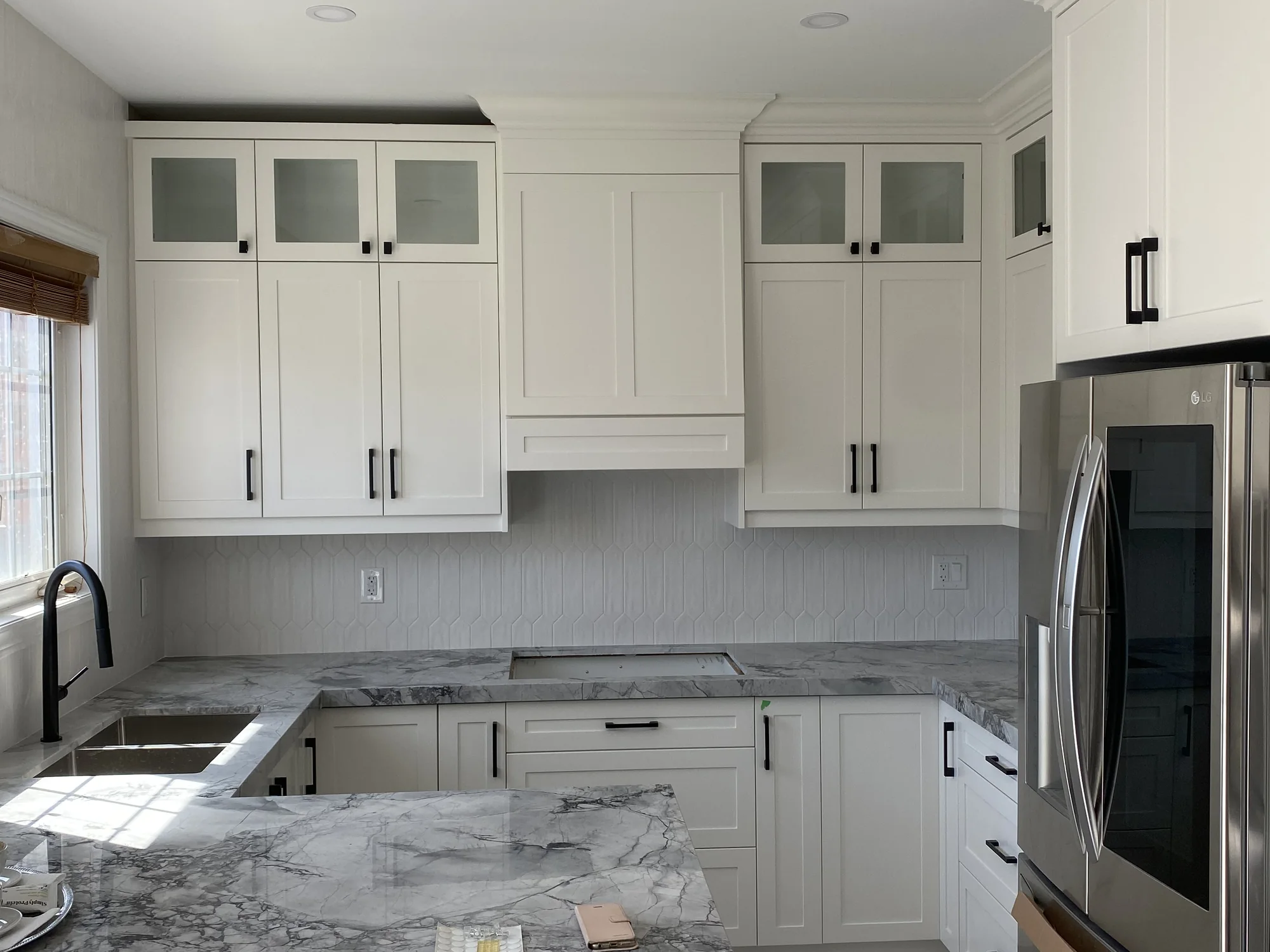
Transitional white kitchen cabinetry with Shaker doors, simple dark pulls, restrained crown detail, glass cabinets, and clean proportions.

Transitional Kitchen Cabinets

A deliberate bridge between traditional character and modern simplicity, using clean proportions, moderate detail, and a controlled classic–modern balance.

What Defines Transitional Style?

Transitional kitchens deliberately balance traditional character with modern simplicity through clean proportions, moderate detail, and a warm but uncluttered composition.

Door Profiles & Balanced Details

Shaker and narrow-Shaker doors are common starting points, along with restrained recessed profiles, simplified glass doors, and selective slab accents. Shaker is a cross-style profile and is not exclusive to Transitional design.
Materials & Finish Directions

Painted MDF, thermofoil, selected solid-wood doors, veneers, matte decorative panels, and restrained metal or glass accents may all support the style. These choices do not establish a budget tier, and cabinet-box construction is confirmed separately.

Finding Your Classic–Modern Balance

Rail width, profile depth, crown detail, hardware, colour, texture, glass, and integrated lighting can shift the result more classic or more modern while preserving a balanced Transitional composition.

Selected Project Examples

Two strong Transitional anchors followed by secondary examples that show different positions within the classic–modern balance.

Completed white Transitional kitchen with Shaker cabinet doors, simple dark pulls, restrained trim, glass display cabinets, and stone counters.

White Shaker Kitchen

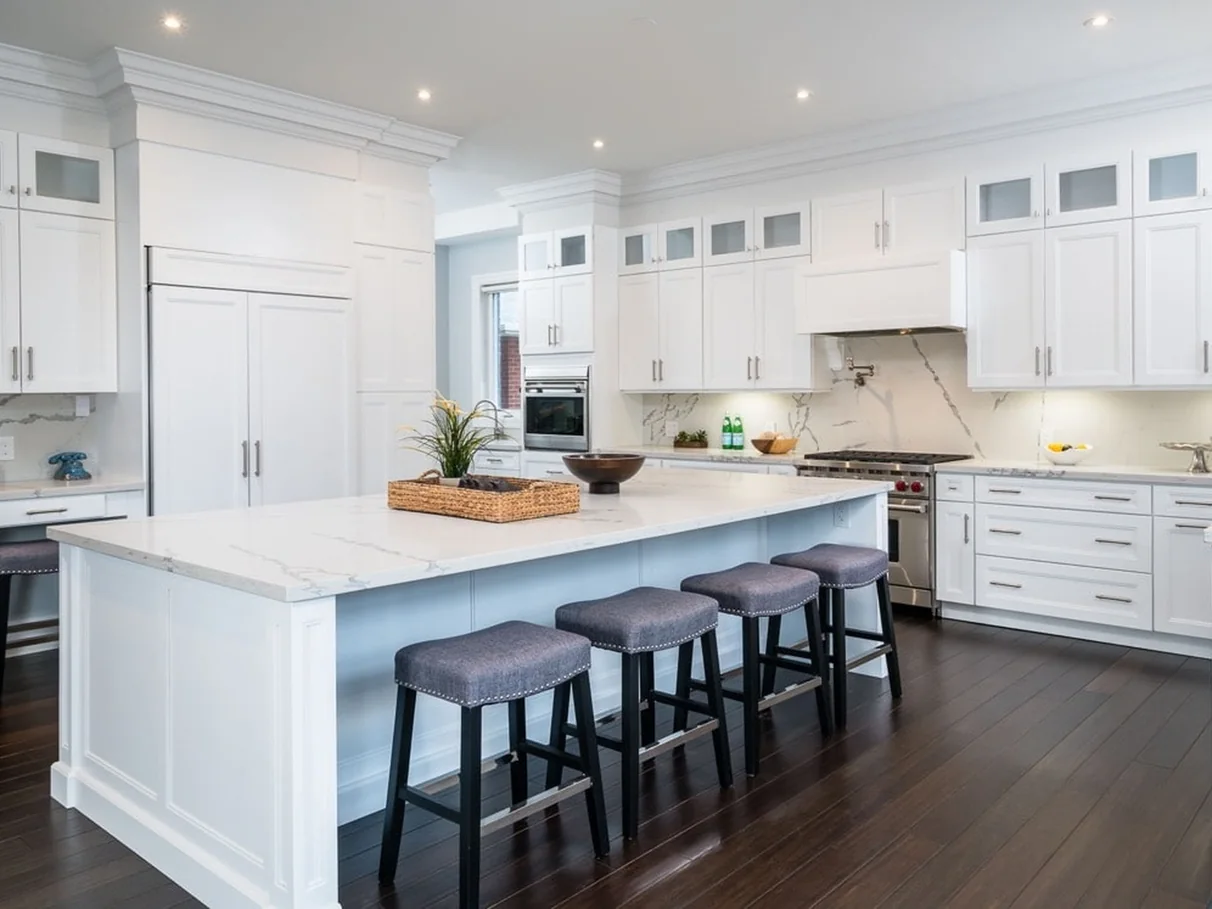
Completed Transitional kitchen with framed white cabinetry, a large clean-lined island, moderate crown detail, and glass-front cabinets.

Balanced Island Kitchen

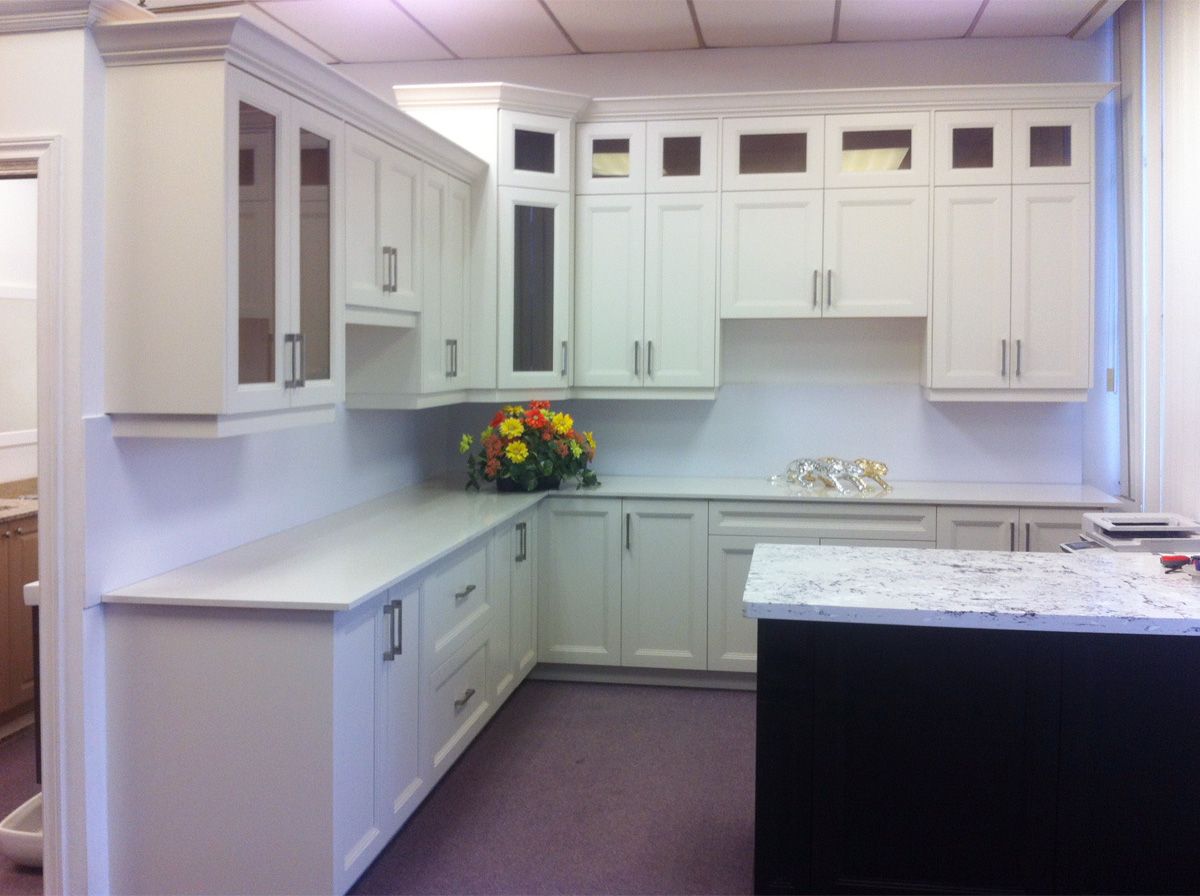
Completed light-toned Roomidea kitchen cabinetry with restrained glass-front uppers and a contrasting dark island.

Light-toned Kitchen Cabinetry

A secondary project example with balanced classic and clean-lined details; its public project wording remains style-neutral.

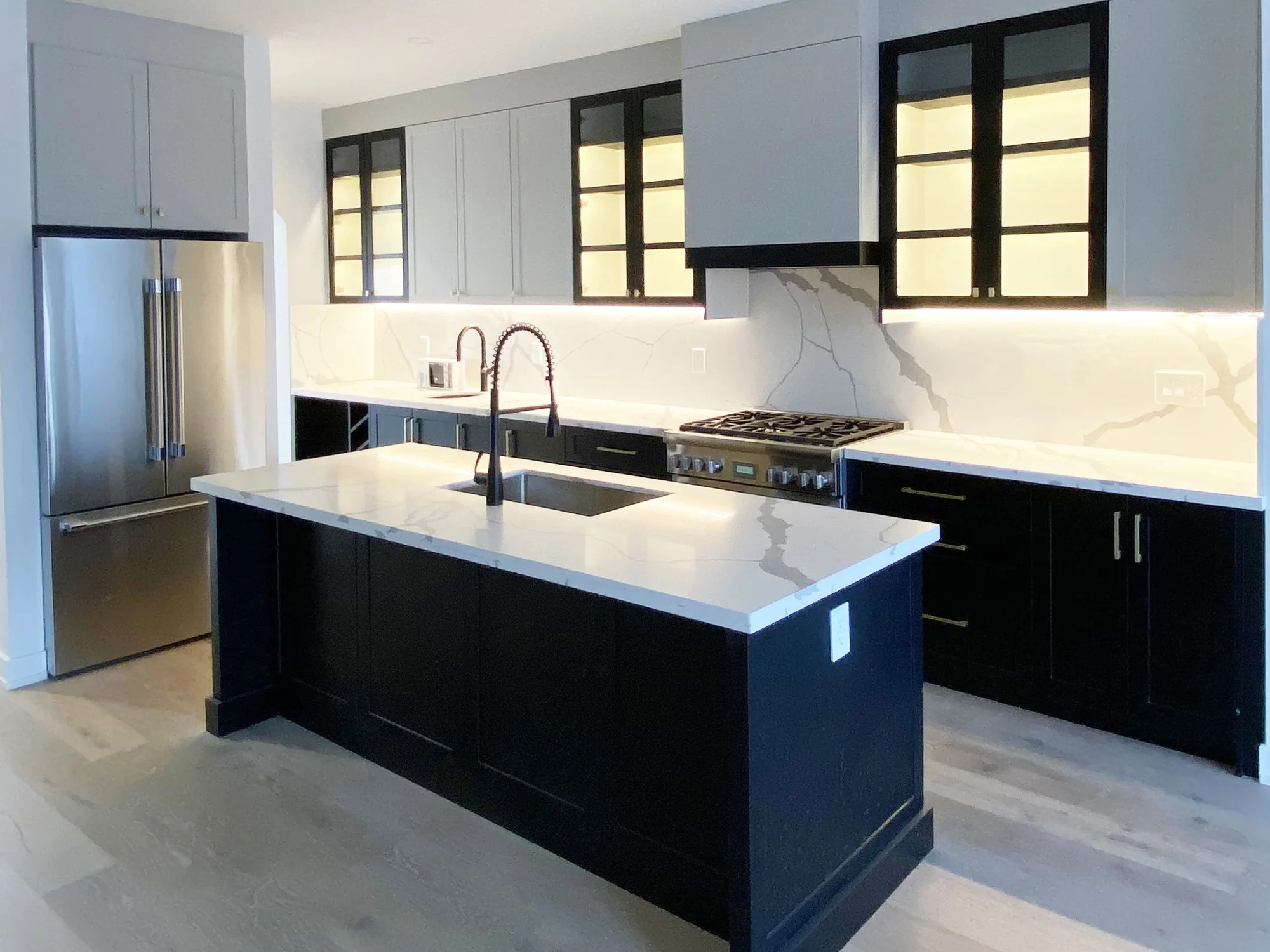
Completed black-and-white kitchen with framed lower cabinets, black-framed glass uppers, and a clean contemporary contrast.

Contrasting Glass-front Kitchen

A secondary example showing how framed details and modern contrast can be coordinated within a Transitional direction.

Planning a Transitional Kitchen

Establish the desired classic–modern balance before choosing the door profile, then coordinate appliance integration, island proportions, storage accessories, and lighting around the layout.

Start a Transitional Kitchen Estimate

Share inspiration for the classic–modern balance you prefer, along with room photos, dimensions, appliance information, and storage priorities.